How do digital door displays enhance space utilization and patient guidance in medical centers and clinics? This blog explores how displays integrated with the Axel system eliminate manual signage, improve patient safety on wards, and help professionals find vacant rooms in seconds. Learn how smart room management transforms physical space into an efficient care environment.
Digital door displays have become increasingly popular in conference rooms over the past decade. These displays make it easy to see when and for whom a room is booked, and making new room bookings is a breeze. Did you know that similar door displays are also used in healthcare, especially in outpatient settings? In healthcare settings, digital door displays provide a variety of benefits, and I will explore four key benefits in more detail.
1. Automated room management eliminates manual tasks and errors
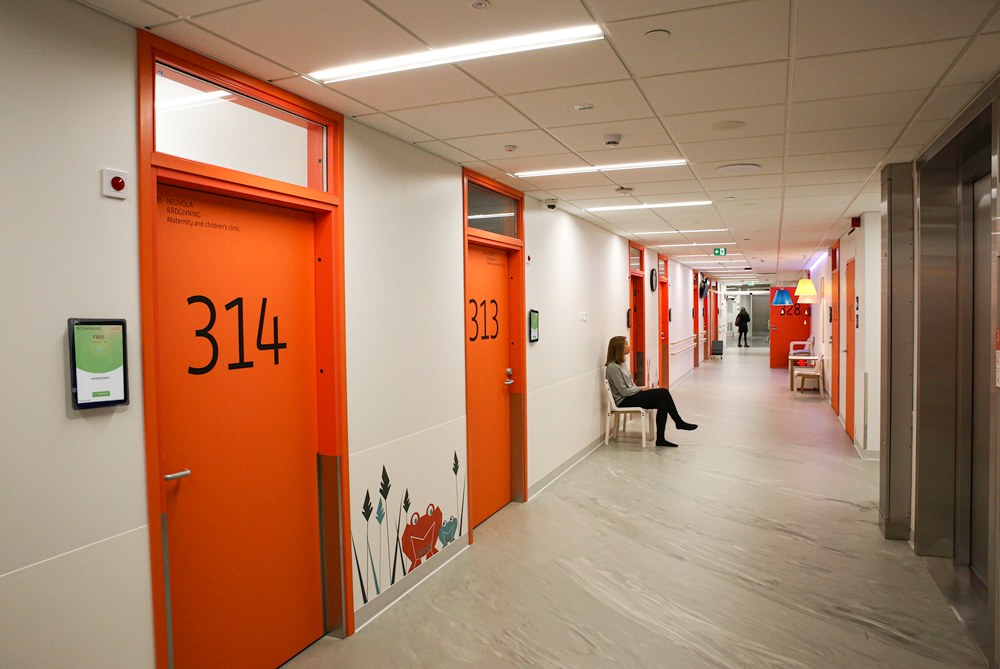
In many medical centers and clinics, a secretary still goes around in the morning and during the day to change the nameplates of the attending professionals placed next to the doors. This takes time, and the nameplates can easily be left unupdated in situations such as sudden schedule changes, sick leaves, or room reassignments. Manually changing the nameplates also increases the risk of errors: an incorrect name on the door may lead to a patient waiting in the wrong place or a professional not finding a free room quickly.
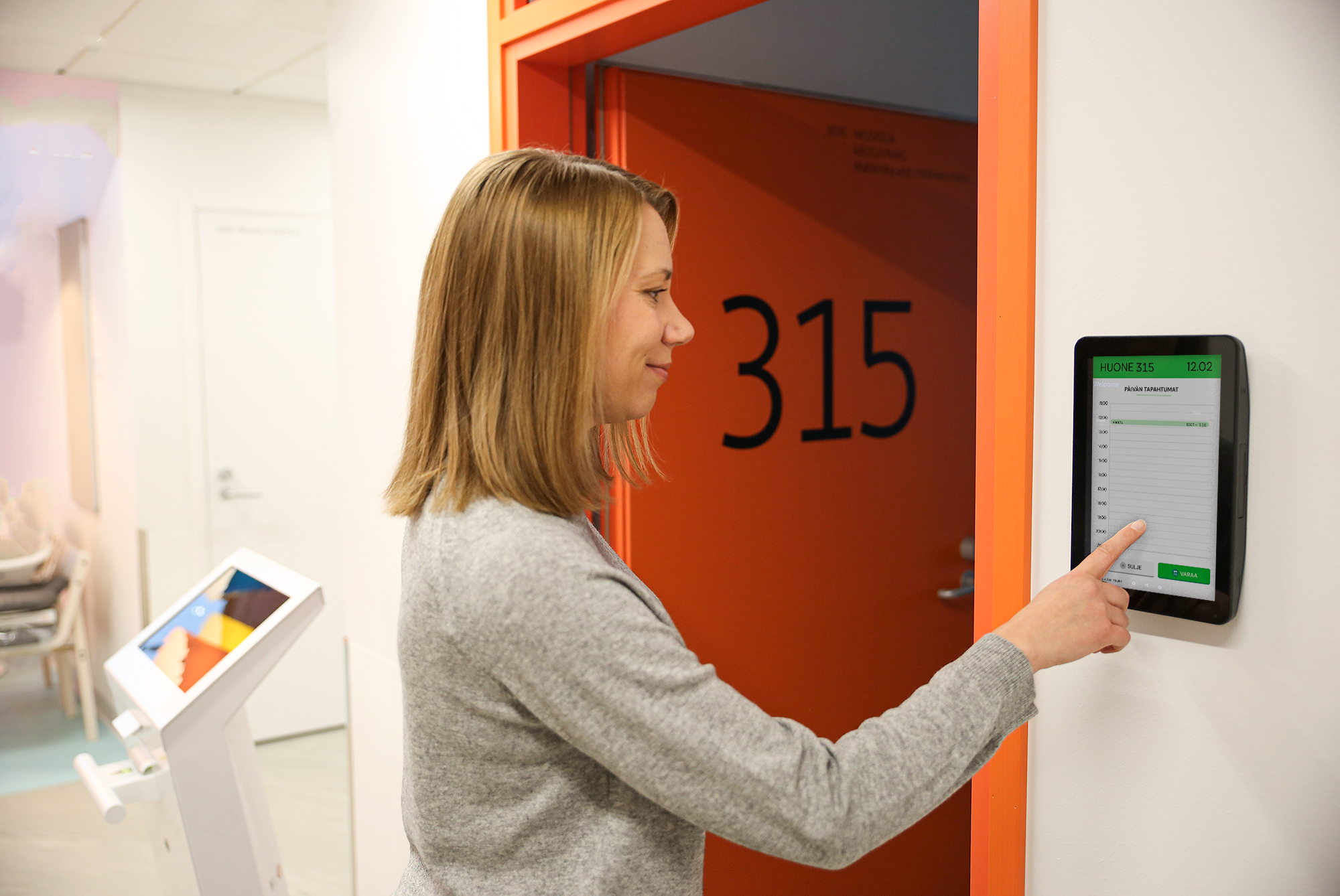
This task can, however, be handled much more easily and quickly through a room booking system integrated with the displays. The digital door displays are updated automatically from the Axel system based on who is using the room and for what purpose. When a professional starts using a room, the information is transferred directly to the door display without anyone needing to go on site to change the signs. In this way, manual work is reduced, and the status of room usage remains up to date.
At a glance, the display shows who is currently in the room, what type of appointment is taking place, and how long the booking will last. This makes it easier for patients to find the right room and supports professionals in their daily work: for example, nurses and administrative staff can immediately see which rooms are free, which are occupied, and where a patient should be directed next. At the same time, space utilization becomes more transparent, and the data can be used for planning room resources.
2. Clear patient guidance: Finding the right room without uncertainty
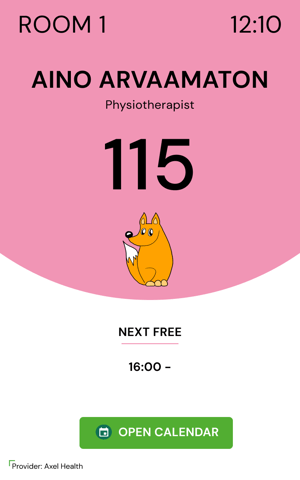
In healthcare services, presenting call in numbers on info displays is already very common. In large health and wellbeing centers, showing the call in number on the door display helps patients find the correct room more easily. When the call in number is shown on the info display and the same number is clearly visible on the corresponding door display, the patient can go directly to the right door without needing additional guidance. At the same time, the patient’s experience of a smooth visit improves, as they always know how their visit is progressing and where they need to go next.
3. Visual room status makes it faster to identify available rooms
Typically, the design of digital door displays is crafted to allow individuals to easily see from a distance whether a room is booked or free. In outpatient settings, these displays provide quick visibility on room availability, whether there is a healthcare professional in the room, and whether there is also a patient in the room.
4. Ward safety: Critical information right at the door
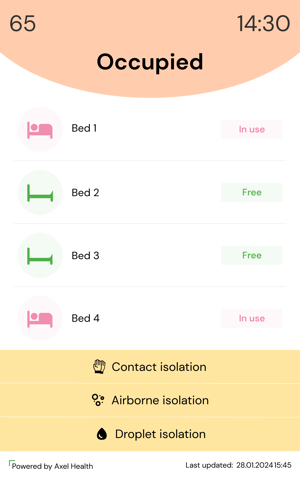
In wards, professionals can receive updates on room status from door displays. Information such as isolation levels, bed availability, cleaning needs, and so on can be easily communicated through these displays.
Axel Health has supplied digital door displays to a wide range of locations, offering seamless integration with our resource planning and patient flow management systems. By integrating door displays with these systems, the benefits they provide can be quickly realized. Would you like to know more?