Use case
The social and healthcare reform placed both services under the same organization within the wellbeing services county of Satakunta, yet in practice they still operated as two separate worlds. Healthcare units and social services had their own systems, and these systems did not communicate with each other.
Satakunta had already built a model for patient transfers that relied on Uoma and on dedicated care coordination roles. This approach has been used since 2019 for transfers within healthcare, such as between emergency care and inpatient wards or from one ward to another. However, once a patient needed to move from healthcare to social services, information flow relied mainly on phone calls.
In practice this meant that busy professionals exchanged crucial details over the phone, and none of that information was stored in any system. Coordinators worked with phone calls, encrypted emails, and unit-specific notes, without anyone having a full overview. Receiving units had to answer calls precisely when the sending unit wanted to initiate a transfer. Documentation of transfers was also inconsistent: information wasn't recorded in a structured way, and it was difficult to trace the reasoning behind decisions.
It was clear that a tool was needed to finally bring these two worlds into one shared transfer process.
Uoma has long been used in Satakunta for patient transfers within healthcare, for example, from emergency care to wards or between inpatient units. In October 2025, a major expansion was introduced: Uoma can now also be used for transfers from healthcare directly to social services. For the first time, it is possible to move a person from medical care to social services without phone calls or manual reporting.
Care coordinators can assess the patient's situation and make transfer decisions based on structured, reliable information. All essential details—such as the patient’s care needs, mobility, cognitive status, and any treatment limitations—are presented in Uoma in a standardized format. Information looks the same regardless of who submitted the transfer request.

"These kinds of transfers have never been done at this scale. It spans the entire patient journey – from emergency care to home."
When, for example, a specialist care unit determines that a patient no longer requires specialist-level treatment, it submits a transfer request in Uoma. The unit does not need to know where the patient will ultimately go—only that the need for further care has been identified. Responsibility then shifts to the care coordinator. Through Uoma, the coordinator can direct the patient to a basic-level ward, to social services’ client guidance, or directly to home hospital care.
Transfers are visible to all receiving units, and all information, decisions, and comments are automatically stored in Uoma. Unlike before, nothing relies on memory or paper notes. The process is traceable and safe.
Thanks to Uoma, the patient journey now begins the same way, no matter where the patient is. When a unit determines that the patient no longer needs the care it provides, the unit submits a transfer request in Uoma and fills in structured information about the patient’s condition. The care coordinator receives the notification immediately and can evaluate the overall situation using the details provided.
The coordinator then directs the patient to the appropriate place: a basic-level ward, an assessment unit via client and service guidance, or home with the support of home care or home hospital services. Once the destination is selected, the transfer appears in the receiving unit’s own Uoma view. Uoma’s chat allows direct communication between the sending and receiving units. For example, home care can handle transfers as part of everyday work. The unit can prepare for the incoming client, review the patient’s functional capacity directly from the ward before discharge, ensure necessary equipment is ready, and plan upcoming visits.
The transfer itself, preparation for transfer, and follow-up care are now visible in one system. For the first time, the process is transparent for all parties—including social services.
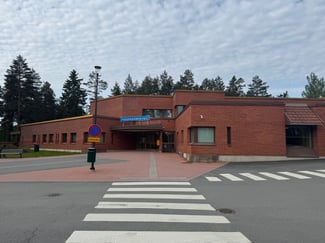
"When transfers are in Uoma, home care no longer has to answer the phone at the exact moment someone wants to make a transfer. Everything is visible on the list."

Uoma has transformed how cross-sector transfers are handled in the wellbeing services county of Satakunta. During the first three weeks, over 130 transfers per week were already made through Uoma, and the number has continued to grow. In specialist healthcare, the process has become faster because phone calls no longer slow things down. In receiving units—especially home care and assessment units—the situational overview has improved significantly. Everyone sees the same information and can prepare well in advance.
For coordinators, Uoma has removed the need to chase information manually. Their work is now based on structured, reliable data instead of reports delivered over the phone.
Uoma is not just a new tool—it represents a complete shift in operating model. It is the first solution in Finland to unify healthcare-to-social-care transfers on this scale, making transfers consistent, traceable, and safe.